The Battery Show 2026 Recap: Energy Storage Takes Center Stage
The EMS team talking with visitors at Booth 5442 at The Battery Show 2026 in Detroit.
The Battery Show North America wrapped up last week at Huntington Place in Detroit. It was unseasonably warm outside, and the energy on the floor matched it. Thank you to everyone who stopped by Booth 5442 to talk about connections, cell formats, and the problems that keep battery engineers up at night.
Here’s what our team heard, what we showed, and what’s coming next.
Energy storage was the story of the show
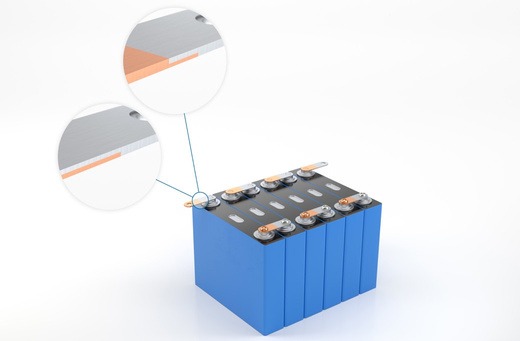
Aluminum/copper clad connectors on prismatic cells.
The biggest shift we noticed was the attention on battery energy storage. Storage systems are growing fast, and they need more cell connections, longer service life, and a lower cost per system than ever.
We also heard a lot about cell formats. More designs are bringing cylindrical cells into the mix alongside the large prismatic cells common in storage today. Each format puts different demands on the parts that connect cells together.
Copper costs are shaping design decisions
Pure copper is the default for conductivity, but its price set records this year. Many of the engineers we spoke with are looking for ways to keep copper’s performance at the joint without paying for solid copper everywhere else.
That’s exactly what clad metal does. It puts copper only where the part needs it, at the contact and joining surfaces, and uses a lighter, lower-cost metal for the rest.
Many designs we see could save on the amount of copper used, while getting the same thermal and electrical results, while saving on space and cost.
What we showed in Detroit
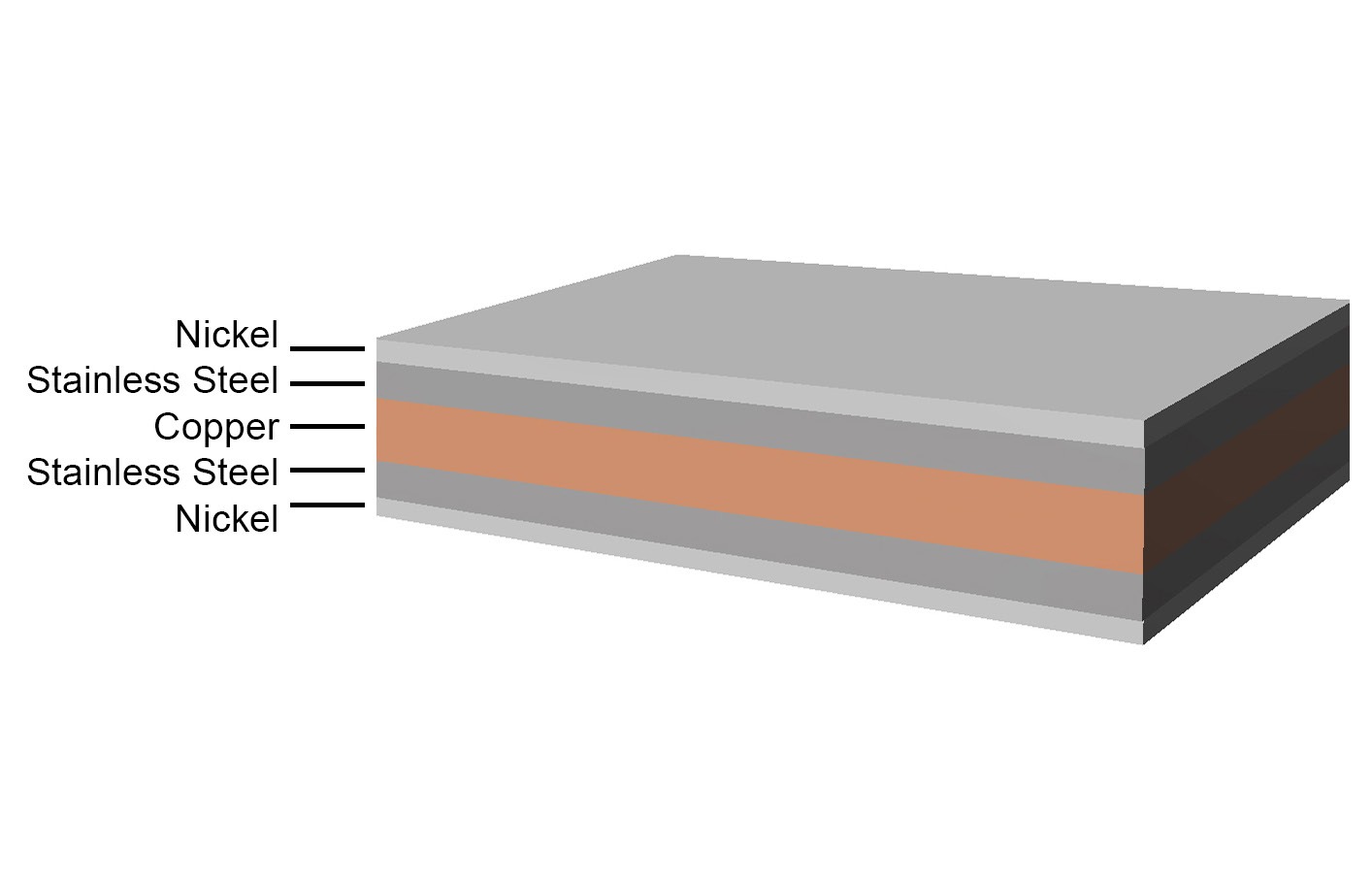
SigmaClad®: our five-layer nickel, stainless steel, copper, stainless steel, nickel connector material for cylindrical-cell packs. In our testing, SigmaClad 60 carried about 2.8 times the current of nickel strip of the same size before reaching 50 °C, and it can still be resistance or laser welded.
Aluminum/copper clad: for prismatic-cell connectors. It combines aluminum’s low weight with a copper surface for high-conductivity joints.
CoreLok® edge clad: copper on one end and aluminum on the other in a single strip, so every busbar joint can be like-to-like.
Didn't make it to Detroit?
We’d still like to hear what you’re working on. Learn more aboutSigmaClad or email us at solutions@emsclad.com and tell us about your application.
Engineered Materials Solutions has made clad metals since 1916. From Attleboro, Massachusetts, EMS develops and produces clad strip and tailored material composites that combine conductivity, strength, weldability, and corrosion resistance in a single material.
EMS is a member of the Wickeder Group, a family-owned group of metal materials and component manufacturers headquartered in Wickede (Ruhr), Germany. The Group’s roots go back to 1913, when parent company Wickeder Westfalenstahl began developing and producing clad materials. Today its 12 companies employ about 1,100 people across Europe, North America, and Asia, linked by shared management and quality systems.
Get early access to our new battery designers' guide
We’re finishing the Clad Materials Designers’ Guide for Batteries. It covers how clad materials work in cells and packs, with worked examples for resistance, heat, expansion, and joining, plus data for our standard battery materials.
Click the button below and just fill out the three questions and you’ll be among the first to get it!